If you use a mobile phone with location services turned on, it is likely that data about where you live and work, where you shop for groceries, where you go to church and see your doctor, and where you traveled to over the holidays is up for sale. And U.S. Immigration and Customs Enforcement is one of the customers.
The U.S. government doesn’t need to collect data about people’s locations itself, because your mobile phone is already doing it.
While location data is sometimes collected as part of a mobile phone app’s intended use, like for navigation or to get a weather forecast, more often locations are collected invisibly in the background.
I am a privacy researcher who studies how people understand and make decisions about data that is collected about them, and I research new ways to help consumers get back some control over their privacy.
Unfortunately, once you give an app or webpage permission to collect location data, you no longer have control over how the data is used and shared, including who the data is shared with or sold to.
Why mobile phones collect location data
Mobile phones collect location data for two reasons: as a by-product of their normal operation, and because they are required to by law.
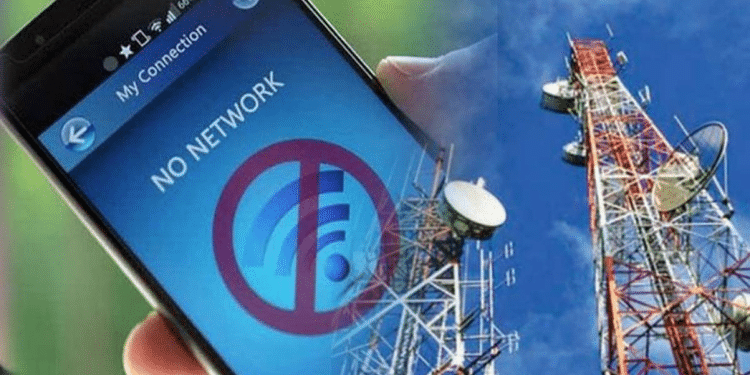
Mobile phones are constantly scanning for nearby cell towers so that when someone wants to place a call or send a text, their phone is already connected to the closest tower. This makes it faster to place a call or send a text.
To maintain quality of service, mobile phones often connect with multiple cell towers at the same time. The range of the radio signal from a cell tower can be thought of as a big bubble with the cell tower in the center.
The location of a mobile phone can be calculated via triangulation based on the intersection of the bubbles surrounding each of the cell towers the phone is connected to.
In addition to cell tower triangulation, since 2001, mobile phone carriers have been required by law to provide latitude and longitude information for phones that have been used to call 911.
This supports faster response times from emergency responders. The ‘Today’ show gives an overview of how your phone reveals where you go and what you do.
How location data ends up being shared
When people allow webpages and apps to access location data generated by their mobile phones, the software maker can share that data widely without asking for further permission. Sometimes the apps themselves do this directly through partnerships between the maker and data brokers.
More often, apps and webpages that contain advertisements share location data via a process called “real-time bidding,” which determines which ads are shown.
This process involves third parties hired by advertisers, which place automated bids on the ad space to ensure that ads are shown to people who match the profile of interests the advertisers are looking for.
To identify the target audience for the ads, software embedded in the app or webpage shares information collected about the user, including their location, with the third parties placing the bids.
These third parties are middlemen that can keep the data and do whatever they want with it, including selling the data to location data brokers, whether or not their bid wins the auction for the ad space.
Also Read: Bill Gates Responds to Claims of Vaccines Tracking People’s Locations
What becomes of the information after it’s been distributed?
Information obtained by firms that collect and sell location data issold widely, even those namedlocation-based service providers that repackage it and sell access to tools that monitor people’s locations. Some of these tools do things like provide roadside assistance. Others are used by police, government agencies, and others to track down individuals.
In October 2025, news outlets reported U.S. Immigration and Customs Enforcement acquired a location tracking instrument from Penlink that is capable oftrack movements of specific mobile devices* across a period at a specific place. * as time passes in a particular area. * throughout a duration in a certain spot. * during an interval within a defined locale. * with the passage of time at a set location.
Tools such as these give users the ability to get location information from “a huge number of cell phones” without a warrant.
Also Read: Got a bunch of vehicles on the road? Here’s why you need to start using tracking and fleet management.
Why it matters
Secretly gathering, selling, and re-purposing location information is problematic due to the highly personal nature of this data, as it is extremely sensitive.cannot be made anonymousThe places people frequent most are their residences and workplaces.
From this information alone, it is trivially easy to determine a person’s identity and match it with the other location data about them that these companies have acquired.
Furthermore, many individuals are unaware that the location information they permitted apps and services to gather for a specific reason, such as directions or the forecast, can expose private details about them that they might not want sold to a location data aggregator.
In a research paper I released concerning fitness tracker information, I discovered that despite individuals utilizing location data to monitor their exercise path, theydidn’t think abouthow the information might reveal where they live.
Because individuals are often unaware, they cannot reasonably foresee that information gathered from their everyday mobile phone usage could be accessible to entities like U.S. Immigration and Customs Enforcement.
To better safeguard your privacy, we could implement stricter rules regarding the collection and sharing of location data by mobile carriers and apps, as well as limit how the government can access and utilize individuals’ location information.
To date, Federal Trade Commission efforts to curb carriers’ data sales have had mixed results in federal court, and only a few states are attempting to pass legislation to tackle the problem.
Emilee Rader, Professor of Information, University of Wisconsin-Madison
Emilee Rader, University of Wisconsin-Madison
This article is republished from The Conversation under a Creative Commons license. Read the original article.
Follow our WhatsApp Channel and X Account for real-time news updates.