
Military aircraft have never been cheap, but the top tier exists in a class of its own. Stealth technology, exotic materials, mission-critical avionics, and decades of R&D have pushed the price of modern airpower into a price range once reserved for infrastructure mega-projects.
These aircraft are more than machines. They are statements of power, engineering milestones, and in some cases, the most complex systems ever built by humankind. From stealth bombers designed to penetrate nuclear air defenses to flying command centers built for national security, here are the five most expensive military aircraft ever created, based on documented program or procurement costs.
1. Northrop B-2 Spirit – The $2 billion stealth ghost
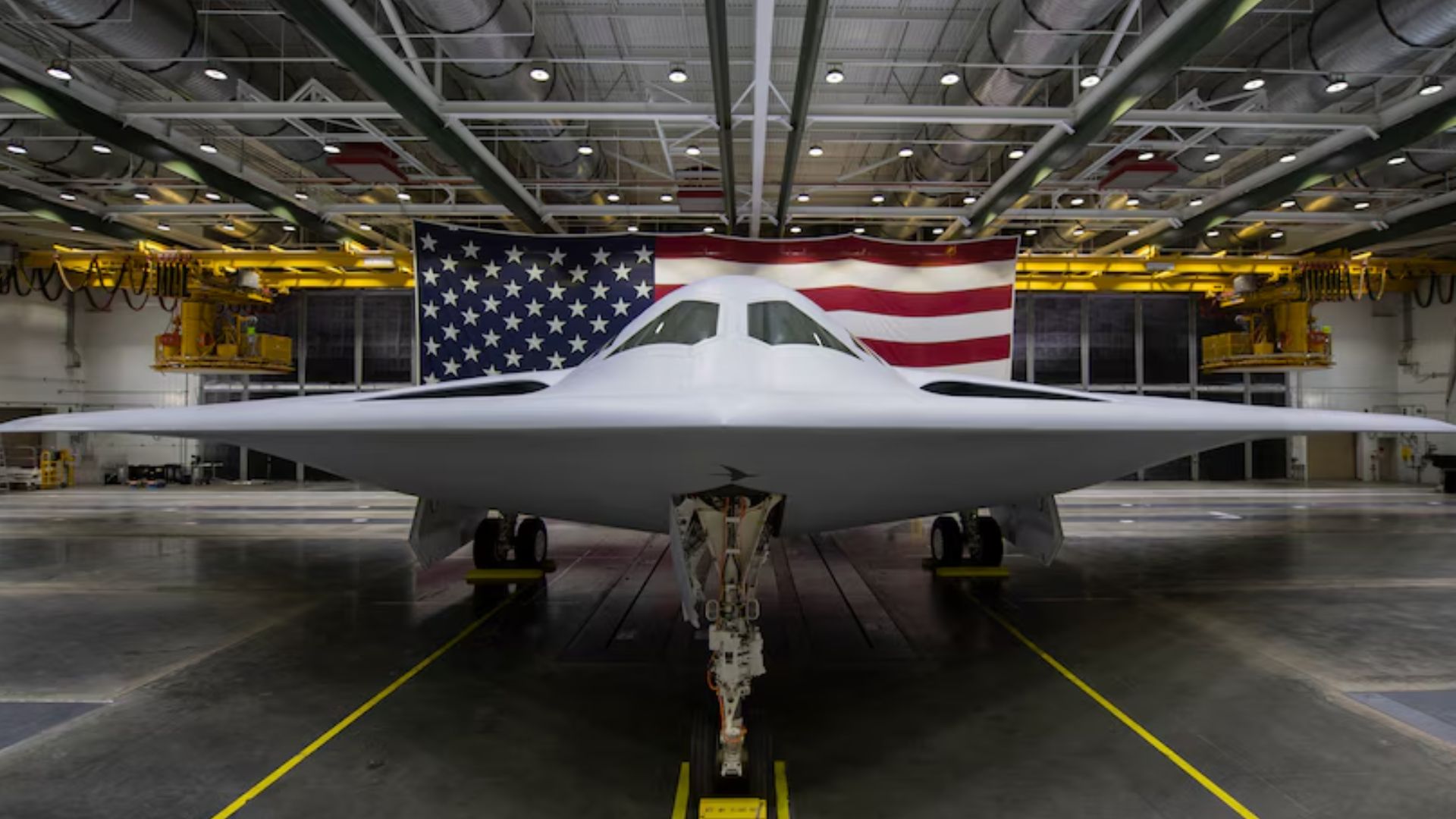
The B-2 Spirit still holds the crown as the most expensive aircraft ever built. According to U.S. Air Force and Department of Defense records, the total B-2 program cost reached $44.75 billion by 1997 for 21 aircraft. That places the program’s average procurement cost at approximately $2 billion per bomber. The actual flyaway, or “build,” cost was substantially lower, about $737 million per aircraft, but R&D, specialized infrastructure, testing, and decades of sustainment drove the total program cost into unprecedented territory.
Because the Air Force has never released an official inflation-adjusted figure, most analysts continue to reference the documented $2 billion per-unit program cost rather than extrapolated totals.
Only 21 B-2s were produced, and 19 remain in service today, assigned to Air Force Global Strike Command. Designed to slip through dense Soviet-era air defenses with either nuclear or conventional weapons, the Spirit has seen combat in Kosovo, Afghanistan, Iraq, Libya, Syria, and most recently Iran. The Air Force plans to retire the fleet around 2032 as the B-21 Raider comes online, but until then, the B-2 remains America’s most exquisite and expensive flying weapon system.
2. VC-25B “Air Force One” – The flying White House
Most jets on this list are bombers or fighters. The VC-25B is a head-of-state transport and one of the most expensive military aircraft ever built. In 2018, the Air Force signed a fixed-price $3.9 billion contract with Boeing to convert two 747-8 airframes into the next-generation Air Force One fleet. With inflation and overruns, it is estimated that the effective cost per aircraft is roughly $2-2.5 billion before operating costs.
The money isn’t just for a fancy paint job. Each VC-25B is effectively a hardened command bunker, with EMP shielding, secure global communications, aerial refueling, self-defense systems, and custom interiors that support the president, senior staff, medical facilities, and the press. The program has been delayed into the late 2020s, with delivery currently projected around 2027–2029. Upon entering operation, the pair of VC-25B aircraft will supersede the older VC-25A jets, which have been transporting U.S. presidents since the beginning of the 1990s.
3. Northrop Grumman B-21 Raider – A sixth-generation bomber.
The B-21 Raider, currently under development, is already one of the priciest aircraft on this list. The Air Force aimed for an Average Procurement Unit Cost of approximately$692 millionUsing 2022 as a baseline for currency value, current open-source projections suggest the actual cost per plane is approximately in the…$750-800 million range, contingent on your method of factoring in inflation and associated expenses. This makes it more economical than the B-2 when considering individual aircraft costs, but remains an exorbitant figure for a project with goals of fielding at least 100 planes, and possibly as many as 145.
The Raider, the first bomber of its kind to be designated as “sixth-generation,” was intentionally built with stealth capabilities, a flexible system design, and the capacity to deploy both nuclear and traditional armaments. After its initial flight in 2023, a second prototype was added to the flight testing initiative by 2025. The B-21 is projected to eventually take the place of the B-1B and B-2 aircraft, becoming the core of the United States’ long-distance attack and nuclear defense forces until at least the middle of the 21st century.
4. Lockheed Martin F-22 Raptor – The king of air-superiority
When research, development, and infrastructure costs are factored in, the F-22 Raptor’s total price tag is approximately$350-360 millionThe cost per plane for the 195 jets amounted to approximately $67.3 billion for the entire program. This makes the Raptor one of the priciest fighter planes ever, which is a key factor in why production was halted well short of the initial projections for.750 aircraft.
The United States Air Force presently operates around180 F-22sAs stated in an official document, the Raptor was created solely to control the skies. It achieves this through a combination of stealth technology, supercruise capability, thrust-vectoring, and sophisticated sensor integration. Its combat experience has mainly been in air patrol and targeted attacks in Syria and the Middle East. It has also been stationed in Europe and the Indo-Pacific region to discourage aggression from Russia and China.
Even as the jet undergoes improvements, the Air Force plans to phase out the F-22 in the 2030s and shift towards the.sixth-generation F-47Currently under development as part of the NGAD initiative, Boeing has started manufacturing the aircraft. The first test flight is scheduled for 2028, with the expectation of achieving initial operational readiness in the latter part of the decade.
5. Lockheed Martin F-35 Lightning II – The fighter jet with a trillion-dollar price tag.
The F-35 is not the most expensive to build per aircraft, but it is by far the most expensive weapons program in history. According to the U.S. Government Accountability Office, the program’s total lifecycle cost is projected to exceed $1.7 trillion through 2070, including development, procurement, operations, and sustainment. That translates to a program cost of more than $400 million per aircraft, averaged across the U.S. fleet, placing the F-35 among the costliest aircraft ever produced.
The price of each aircraft differs depending on the model, generally costing between $80 and $120 million. However, the primary costs are associated with sophisticated software, stealth technology applications, ongoing maintenance, a worldwide support system, and the constant upgrades necessary to ensure the jet remains effective against potential adversaries of similar strength. Beyond that,1,000 F-35s have already been delivered across three services and over 20 partner nations, with production expected to continue through the 2040s.
Even with expenses exceeding budget and ongoing maintenance difficulties, theF-35It has evolved into the cornerstone of Western aerial warfare, delivering sensor integration, stealth technology, and a network-centric attack capacity that surpasses all other fifth-generation aircraft currently operational.