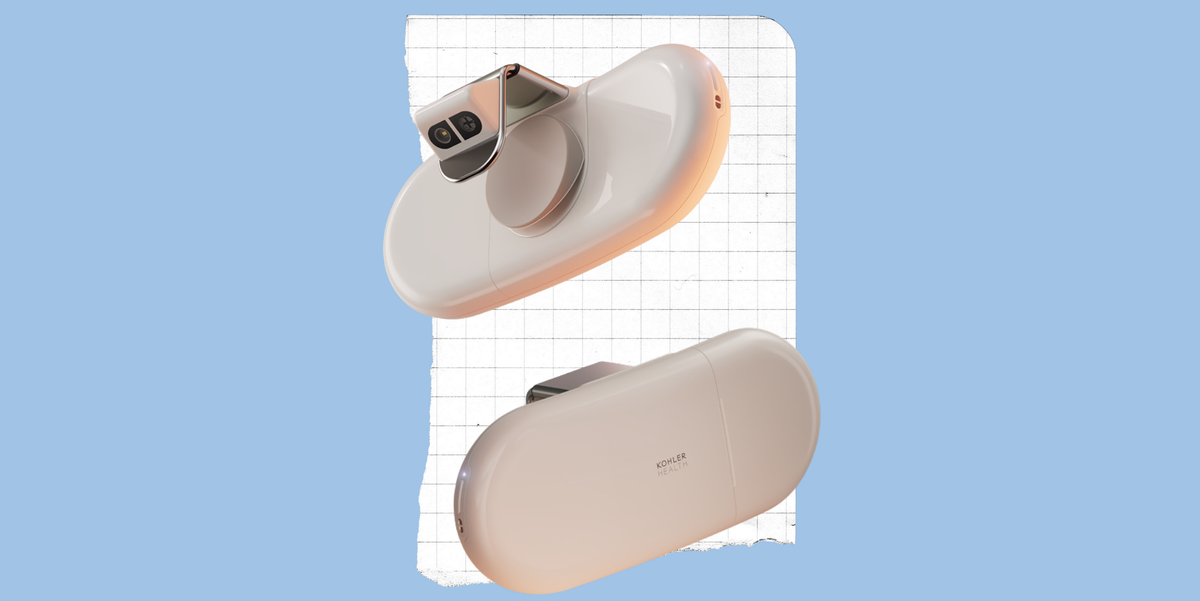
Ever since smart home technology went mainstream about a decade ago, its benefits have largely focused on convenience, for example being able to see who’s at the front door through your video doorbell or to check the temperature when you’re away from home on the app to your smart thermostat. Those are nice amenities. But what if the devices could also help you live a longer, healthier life? That’s the promise of smart health technology.
Kohler is going all in on the concept with its launch of Kohler Health, a division of the company whose mission is to “make the bathroom the center of health and wellness.” The lofty campaign starts with Dekoda, a Wi-Fi-enabled camera that attaches to the inner rim of your toilet, where it uses advanced optical sensors and machine-learning algorithms to analyze your waste (numbers 1 and 2) to assess hydration, gut health, and other health factors.
$599.00
Shop Now
In covering smart home technology with our team in the Home Improvement & Outdoor Lab and Media & Tech Lab, I’m generally a fan. So I was eager to bring the Dekoda into the Lab and into my bathroom at home to see what it could do—and decide if those benefits justify the $599 cost, plus a $6.99 monthly subscription fee.
Getting started
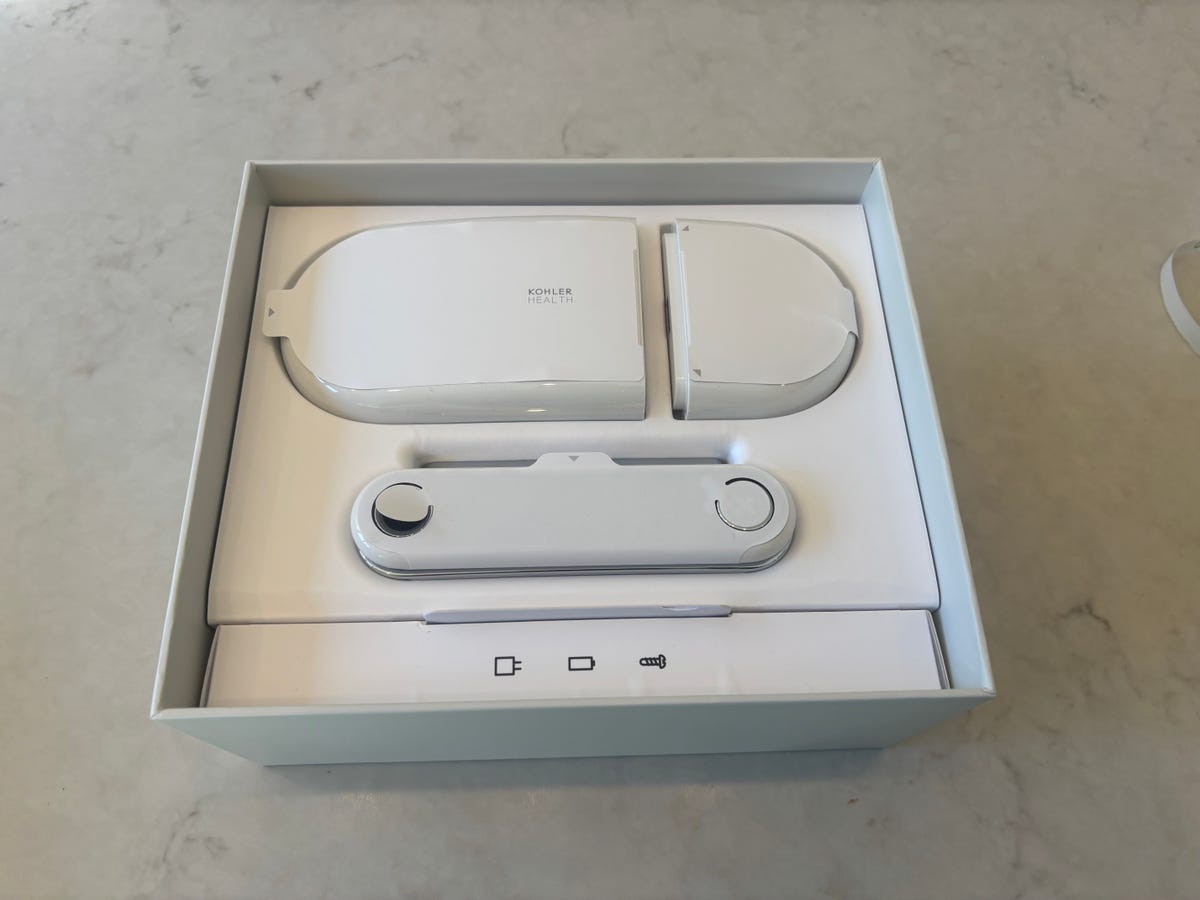
The Dekoda comes in the sleek packaging you’d expect from a high-end tech product, like an Apple iPhone Air or Google Smart Speaker. The device itself is elegantly designed, with soft curves and a crisp white finish. To get started, I downloaded the Kohler Health app and purchased the monthly membership, which is required to use the health tracking features. After charging its battery for a couple hours, I connected the Dekoda to my home’s internet and mounted it to the rim of my toilet using the self-clamping mechanism. (The battery can be removed for recharging every few days via the provided USB cable and plug, without having to detach the entire device from the toilet). Next, I set up the remote, which uses fingerprint authentication to wake up the camera and start a session; these operations can also be done through the app.
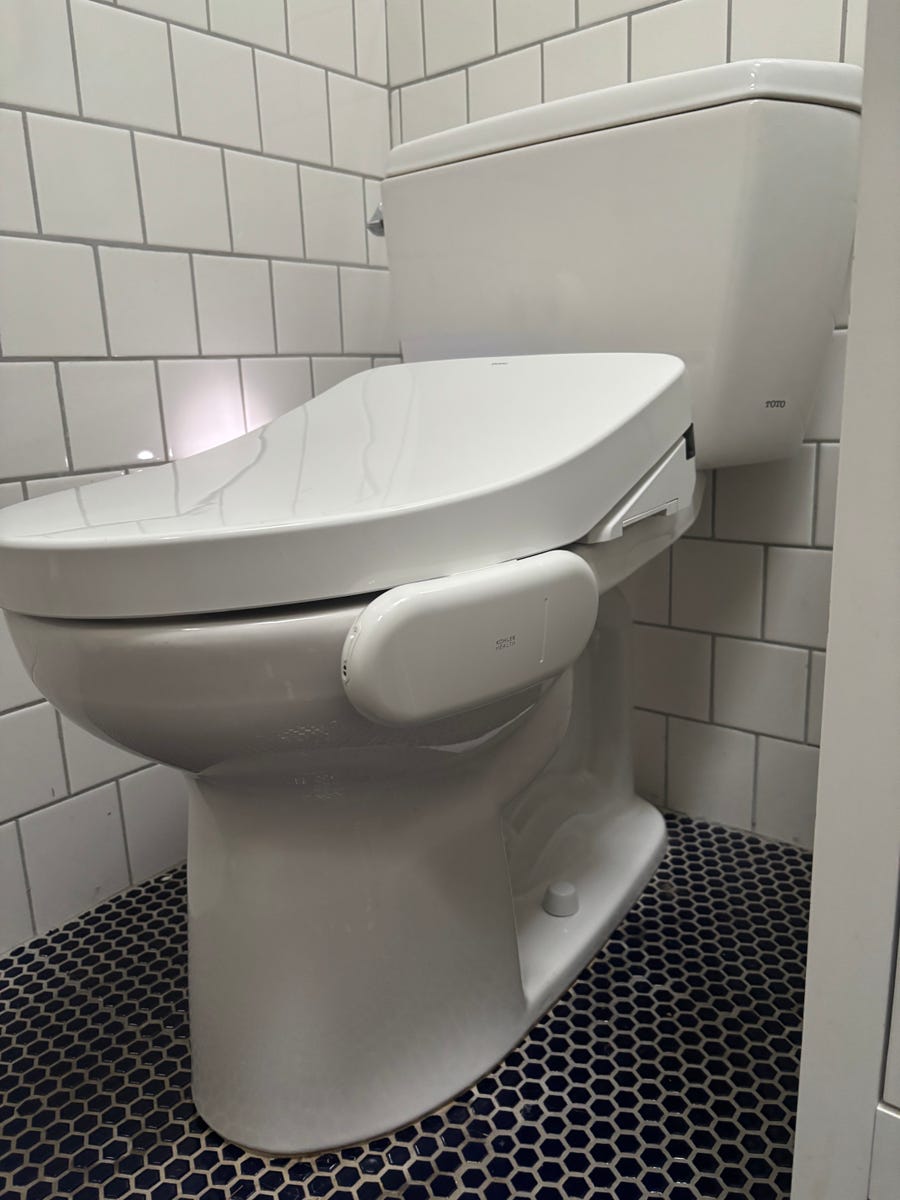
From there, it was all systems go. I’ll admit that my first few times with the Dekoda were a tad disconcerting, knowing there was a camera down there. But as Kash Kapadia, CEO at Kohler Health explained, “the camera is pointed down at the water where it captures our only area of interest, which is the waste in the bowl, not the individual user.” Furthermore, Kohler added multiple layers of security to the Dekoda, including NFC-based presence authentication and end-to-end encryption. So I got used to the idea of the camera analysis quickly enough.
What the camera saw
After about a month of using the Dekoda, I came away with some specific takeaways, the biggest being that I was almost always underhydrated. This surprised me, since I feel like I drink water all day long. But when I checked in with Stefani Sassos, who runs the Nutrition & Fitness Lab at the Good Housekeeping Institute, she broke it down for me, explaining how (and why) I needed upwards of 100 ounces of water a day, based on my body weight and lifestyle.
“How many of those do you go through?” she asked, pointing to my 32-ounce water bottle.
“Two? Maybe three?” I guessed.
“You need at least three,” she said. “And even that might not be enough, since you exercise a lot.”
As for why hydration matters, Sassos explains: “Every single cell in your body needs water to function properly and optimally. Even mild dehydration has been shown to affect energy levels, mood, concentration, and physical performance. Chronic under-hydration can also contribute to headaches, muscle cramps, constipation, dull or dry skin, and even increase the risk of kidney stones.”
Good to know. Especially given the fact that my urine is often pale, which I always took to be an indication of proper hydration. Kapadia maintains that the camera analysis is more accurate than any color test, explaining that the technology was developed around more than a million data points. There’s also the fact that urine mixes with water in the toilet bowl, impacting its color. “Our process is much more scientific,” says Kapadia.
Regarding my digestive well-being, Dekoda’s insights were more positive. My reports generally indicated normal bowel movements, rather than constipation or diarrhea. On the rare occasions I experienced diarrhea, there was a clear explanation, such as the day following Halloween, when I overindulged in beer and sweets. Now, here’s wherethe tagging feature in the app can potentially come into play. Let’s say I was getting a high percentage of “loose” readings. I could start to tag them with the food I ate the day before to identify patterns, which my doctor could in turn use to help identify possible causes, from food intolerance to celiac disease.
Thankfully, I haven’t encountered any instances of “blood in the bowl” readings. However, it’s reassuring that the camera is sensitive enough to detect even small traces of blood, as this can be an initial sign of significant health problems, such as ulcers or inflammatory bowel disease.
The bottom line
After a month of using Dekoda, I have mixed feelings. Initially, it seemed like the device wasn’t offering any insights beyond what I already knew by simply being aware of my body and observing my urine. However, it did reveal my need to increase my water intake. Furthermore, I began to find the data motivating. For instance, I’m now striving to increase my weekly hydration percentage above 50%, a significant improvement from the meager 10% I averaged when I began analyzing my urine.
Dekoda, in this sense, resembles other health and fitness trackers such as smartwatches, smart rings, and various wearable devices. Is a constant flow of data essential for maintaining a healthy lifestyle? Certainly not. However, it’s also not detrimental. Andincreased awareness of your body’s inner workings can help promote healthy habitsMy personal experience with hydration serves as an example. Therefore, if you’re able and interested in a toilet camera, Kohler’s Dekoda is worth considering, particularly because software updates continually bring fresh features and capabilities.
Why trust Good Housekeeping?
This piece was penned by.Dan DiClerico, who heads the Home Improvement & Outdoor Lab at the Good Housekeeping Institute. DiClerico has spent over 25 years evaluating and reporting on home-related products, such as bathroom fittings and smart home devices. He manages all laboratory testing and the consumer surveys conducted in actual homes, which enable us to assess products in realistic scenarios.
Stefani Sassos, Nutrition & Fitness Lab Director, shared health-related insights into toilet cameras. She holds a master’s degree in clinical nutrition from New York University, as well as advanced certifications as a Women’s Fitness Specialist.