
Solid Fuel Ramjet (SFRJ) and Hypersonic Dual-Mode Ramjet (DMRJ) technologies are advancing quickly, fueled by increased U.S. investment and progress in hypersonic weapon development.
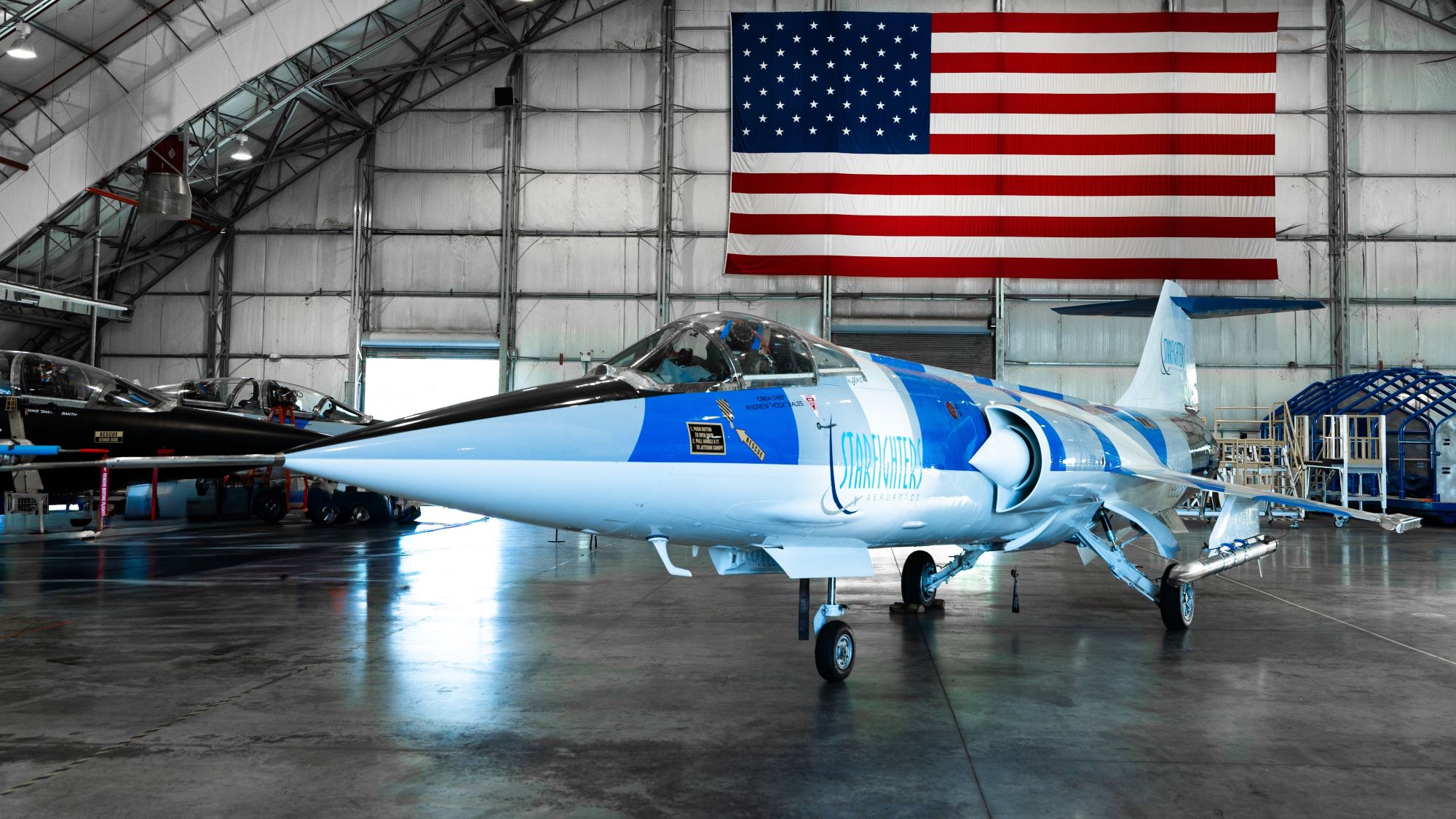
GE Aerospace has revealed further details regarding its initiatives in hypersonic propulsion.announcingOn September 22, 2025, tests were conducted on a Solid Fuel Ramjet (SFRJ) propulsion system at the Kennedy Space Center and a dual-mode rotation-detonation combustion ramjet at the GE Aerospace Research Center in New York. The SFRJ was mounted on the Atmospheric Test Launched Airbreathing System (ATLAS) Flight Test Vehicle, which completed “a successful supersonic captive carry” flight test.
On a promotional video that was made public onOct. 1, 2025GE shared the technical details and testing criteria used in the ATLAS trial regarding an.F-104 Starfighter, had undergone three successful flight trials by September 22. ATLAS, secured as a non-detachable test item on the left wing of the Starfighter, which achieved supersonic velocities during these trials, “received funding from the Department of War through Title III of the Defense Production Act to advance air-breathing propulsion technology, aiming to increase the range of weaponry.”
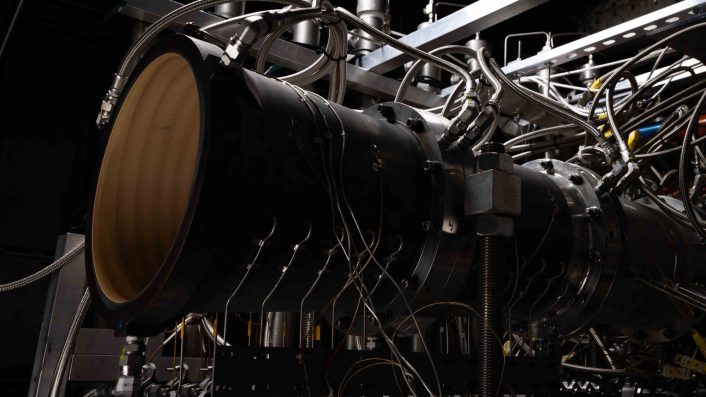
GE showcased their Hypersonic Dual-Mode Ramjet (DMRJ), a rotation-detonation engine, in late 2023 at their Niksayuna, New York research facility. According to a press release on January 13, 2025, the DMRJ “utilizes rotating detonation combustion (RDC) technology in a supersonic flow stream.”release.
Solid Fuel Ramjet
The F-104 Starfighter was selected because its high velocity aligned with the anticipated operational speed of the ramjet engine, a speed other test aircraft couldn’t achieve. According to Mark Rettig, GE Aerospace’s Edison Works Advanced Programs VP and GM, “ATLAS is a test platform we’re using to showcase our solid fuel ramjet under real-world flight conditions. The F-104 Starfighter’s Mach 2.2 capability provides an ideal speed for demonstrating the ignition and sustained operation of our SFR.”
Starfighters, the company that owns and operates seven F-104 Starfighter aircraft, uses them for airborne captive carry testing at speeds up to Mach 2. They also launch payloads into space from an altitude of 45,000 feet. Moving from lab and ground testing to testing in an actual flight environment was described as “the next logical step before we actually fly the vehicle on its own.”
Rettig continued, stating that they now have sufficient faith in the propulsion system to proceed to the subsequent stage. The reference to Mach 2.2 also provides insight into the flight path and launch procedure the carrier aircraft must execute to generate the necessary airflow for the SFRJ engines to ignite and start generating power.
A key benefit of solid fuel ramjets is their air-breathing engine’s ability to deliver constant, and potentially adjustable, thrust. This enables the missile to alter course and perform maneuvers, making it harder for standard air-defense missiles that rely on trajectory prediction to intercept. Furthermore, using a solid fuel source instead of a liquid one reduces the missile’s total weight, which enhances its high-speed performance during the final stage.
Ramjets, in contrast to turbojets and turbofans which rely on moving parts like turbines and compressors, employ uniquely designed air intakes. These inlets are engineered to compress air to an optimal pressure, raise its temperature, ignite the fuel, and ultimately produce thrust.
GE’s ramjet engine, which combines rotating detonation combustion with a dual-mode design.
GE started experimenting with the DMRJ in March of 2024 at their Everdale, Ohio location, utilizing a DMRJ created through additive manufacturing. The company noted a “three-fold increase in airflow,” calling it a “tremendous success, both from a combustion performance and thermal structure perspective.” The 3D-printed engine was conceived and constructed in just eight and a half months, and achieved its “first fire within 11 months.”
Rotation detonation engines use the ‘detonation’ (and not ‘combustion’ or ‘deflagration’) of fuel, following its mixture with compressed air, as thrust. This allows more thrust with the same amount of fuel, using the detonation’s shockwaves which travel in a circular pathway, with fuel and oxidizers added periodically.
An RDE exploits the powerful detonation shockwave instead of letting it travel out of the longer exhaust tube. Fuel and oxidizers are added into the circular channel through small holes, whose mix causes a detonation. The circling detonation shockwave hits and ignites (or ‘detonates’) another fuel and oxidizer mix, and the cycle continues.
Projects the engines will power
The engines being developed by GE Aerospace do not appear to be poised to power any of the present air-to-ground hypersonic missiles being pursued by the U.S. military, both under-development and flying examples. Aviation Week reported that GE would offer the DMRJ to power DARPA’s Next-Generation Responsive Strike (NextRS) demonstrator, quoting the executive director of the Edison Works division Craig Young.
The NextRS program is focused on developing a new class of long-range strike capabilities that are both survivable and rapidly deployable. The effort aims to produce an advanced platform with increased range, speed, and mission flexibility compared to current ones.
NextRS aims to empower American military units to access restricted areas and accurately strike urgent targets. The program intends to reach this objective by developing cutting-edge technologies in areas such as structural design and materials science, rapid weapon deployment, adaptable propulsion systems, energy production, heat regulation, and a turbine engine capable of high-Mach speeds.
If you enjoyed this article and would like to stay updated with The Aviationist, please click the Follow button at the top of this page.