
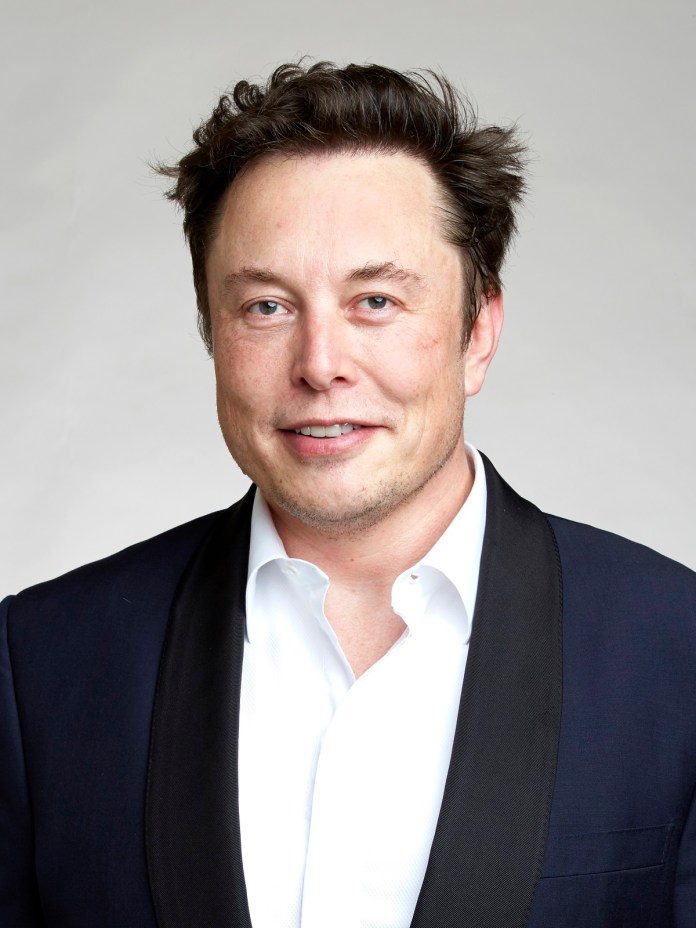
It began almost playfully, with Elon Musk likening future jobs to tending a backyard vegetable garden something done for enjoyment, not necessity. Speaking with Indian entrepreneur Nikhil Kamath, Musk laid out a bold forecast: within 10 to 20 years, advances in artificial intelligence and robotics could make work entirely optional. “My prediction is that in less than 20 years, working will be optional, like a hobby, pretty much,” he said, adding that even a 10–15 year horizon was plausible.
Musk’s vision rests on the accelerating technical capabilities of AI agents and humanoid robots. Today’s AI systems can already automate vast swathes of nonphysical work reasoning, information processing, and document drafting while robotics are advancing toward dexterous, situationally aware physical labor. Analysts estimate that current technologies could, in theory, automate 57% of US work hours, with AI agents covering 44% and robots 13%. The Tesla chief has repeatedly stated his ambition for 80% of Tesla’s future value to come from Optimus humanoid robots, despite production delays. These machines, designed for general-purpose labor, aim to integrate fine motor control, adaptive movement, and AI-driven decision-making to replace or augment human workers across industries.
In Musk’s projected “post-scarcity” economy, money itself may lose relevance. Drawing inspiration from Iain M. Banks’ science fiction, he suggested that an AI-led world could operate without currency, constrained only by fundamental resources like electricity and mass. “My guess is, if you go out long enough… then money will stop being relevant at some point in the future,” he noted. At events like Viva Technology 2024, he has floated the idea of a “universal high income” to sustain populations when labor is no longer economically necessary a concept echoing universal basic income proposals.
The engineering challenge behind such a transformation is formidable. While AI costs are dropping companies now pay $2.50 per million tokens compared to $10 a year ago robotics remain expensive to scale. Physical work still demands capabilities that machines struggle to replicate, such as delicate object handling or complex situational awareness. Large-scale deployment will require robust infrastructure, from high-bandwidth connectivity to reliable energy supply. Musk’s own Starlink network, with thousands of low-Earth orbit satellites delivering low-latency internet, is positioned as part of this backbone, potentially replacing urban 5G networks and expanding into India.
Musk also underscored India’s role in the global tech ecosystem. “I think America has benefitted immensely from talented Indians that have come to America,” he said, acknowledging their impact on innovation and growth. His remarks align with broader trends in skilled migration, where talent from India has fueled advancements in AI, software engineering, and entrepreneurship in the US.
Beyond the utopian framing, economists caution that adoption timelines may be slower than Musk predicts. Robotics’ high costs, specialized nature, and integration complexity mean that even with AI’s rapid progress, full automation of most jobs may take decades. Studies show that while AI has transformed certain workflows radiology being a prime example overall labor market disruption has been less pronounced than anticipated since generative AI’s public debut in late 2022.
The societal implications are equally complex. Workplaces are central to human relationships and identity; removing economic necessity from labor could force a redefinition of meaning and community. As Anton Korinek of the University of Virginia observed, “If the computer and robots can do everything better than you, does your life have meaning?” Musk himself acknowledged this existential dimension, suggesting humans might still play a role in “giving AI meaning.”
For tech-savvy professionals and entrepreneurs, Musk’s forecast is both an engineering roadmap and a philosophical provocation. Achieving a work-optional society will demand breakthroughs in AI autonomy, humanoid robotics, and global infrastructure, alongside political frameworks for wealth distribution. Whether the next two decades deliver that vision or simply edge toward it, the interplay between human skills, intelligent machines, and resource constraints will define the economic architecture of the AI age.