
For years, California lawmakers were stymied. But now, at a crucial juncture for electricity in America, the state is embracing an ambitious and long-awaited plan: to buy and sell far, far more power across Western state lines.
This coming year, a new energy trading market with its first participants is set to go online – a rollout that experts promise will lower monthly home electric bills and supercharge states’ green-energy production. California is set up to lead this push, thanks to its high-tech grid operator, its glut of renewable energy and a fresh bill signed by Gov. Gavin Newsom that paves the way for the regional market.
The West currently trades its energy in what’s known as a “spot market,” where states and municipalities have only 15 minutes to offload their excess solar and wind power to other regions. The new market will widen that timeframe to a full day, giving western states more time to decide where unused energy should go and better prepare for sunny and windy days. As things stand, California often has to curtail its solar and wind production – or turn off the generators, wasting chances to produce energy from sunlight and wind.
“Curtailment is, by definition, a market failure,” Michael Colvin, who leads California energy policy for the Environmental Defense Fund, told Alpine Times. “It is a moment of last resort, of saying, ‘We’ve got to keep the system in balance. We have charged all the batteries we can charge. We have sold all the power that we can sell.'”
This “market failure” is a regular occurrence of California energy waste. The state curtailed 3.4 million megawatt-hours of solar and wind output in 2024, up 29% from the year prior. That’s an amount equivalent to burning nearly 3.9 billion pounds of coal, or enough to power the entire state for almost four and a half days. This waste means that California isn’t making the most of its huge solar buildup – ratepayers helped fund solar farms, but don’t reap the full rewards.
Curtailments happen in part because it’s difficult to redistribute power – even solar power, which has a near-zero cost to generate once a plant is built – at speed. The “spot market,” with its brief timelines, can redirect only so much excess power. Still, that ability to exchange solar, wind and natural gas energy between the states has proven to be cost-efficient, saving Western power brokers more than $7.8 billion since 2014.
Those savings are paving the way for the new, larger and long-awaited collaboration. As Newsom touts California as an energy leader, and skewers the environmental leadership in Washington, D.C., he continues to strengthen ties with his state’s Western neighbors.
A plan to trickle down savings to Californians’ energy bills
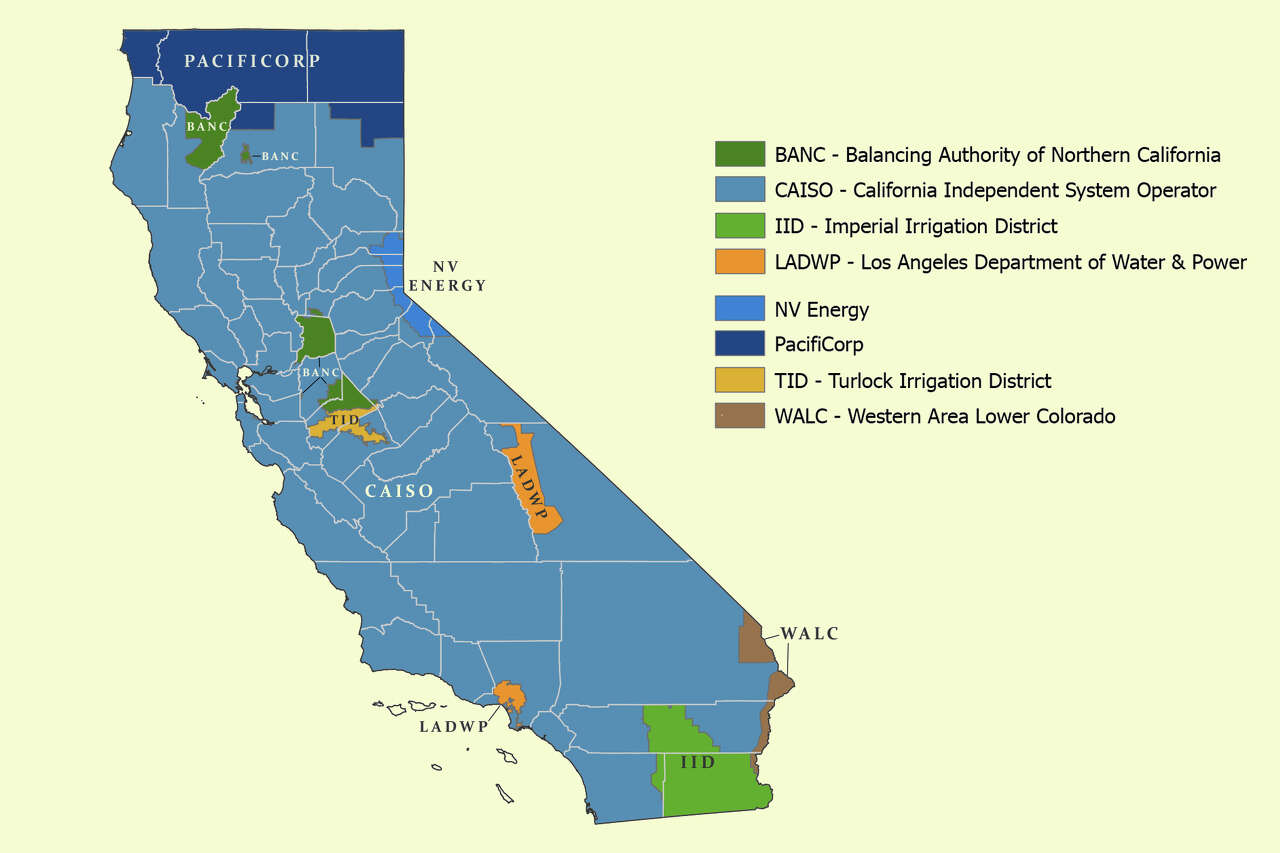
The United States’ electric grid is one of the world’s largest interconnected machines, an everyday miracle of technology and coordination. From the Rocky Mountains west, 35 so-called balancing authorities are responsible for managing their regions’ supplies and demands of energy.
Take, for example, the eight balancing authorities that control California’s energy: The California Independent System Operator – known as CAISO – which handles this responsibility for about 80% of the state’s electric load, and the smaller authorities that handle the power needs of Los Angeles, Sacramento and other regions. These organizations let the state’s power plants and cities participate in the “spot market,” where they can zip excess solar energy to Nevada, for example, and buy blustery Montana’s wind power and Oregon’s gigawatts of hydropower.
With the new extended day-ahead market, balancing authorities like CAISO will be able to make those deals a day full ahead. Colvin, the EDF policy head, pointed to the example of Arizona. As things stand, the state’s balancing authorities might prefer cheap California solar power but can’t just shut down their natural gas plants within 15 minutes. Under the new regime, they can plan to ramp down by 2 p.m., for example, and then get their plants back online by 6 p.m.
“It opens up a whole new set of buyers who would like to buy the excess solar coming out of California,” Colvin said. “… From both a selling perspective and from a buying perspective, having that additional forecast of that day ahead helps people just make smarter choices.”
Those smarter choices, ideally, will save Californians money. The Brattle Group, an economic consulting firm that models energy markets across the country, estimates that the creation of the day-ahead market will cut California’s solar and wind curtailments –– in other words, prevent waste –– by at least 64% and at least 61%, respectively.
This has a few implications, per the Brattle analysis. With more efficient power usage, California wouldn’t need quite as many new solar, wind and battery projects to reach its 2045 goal of sourcing 100% of its energy from renewables. Building fewer projects means fewer costs for ratepayers.
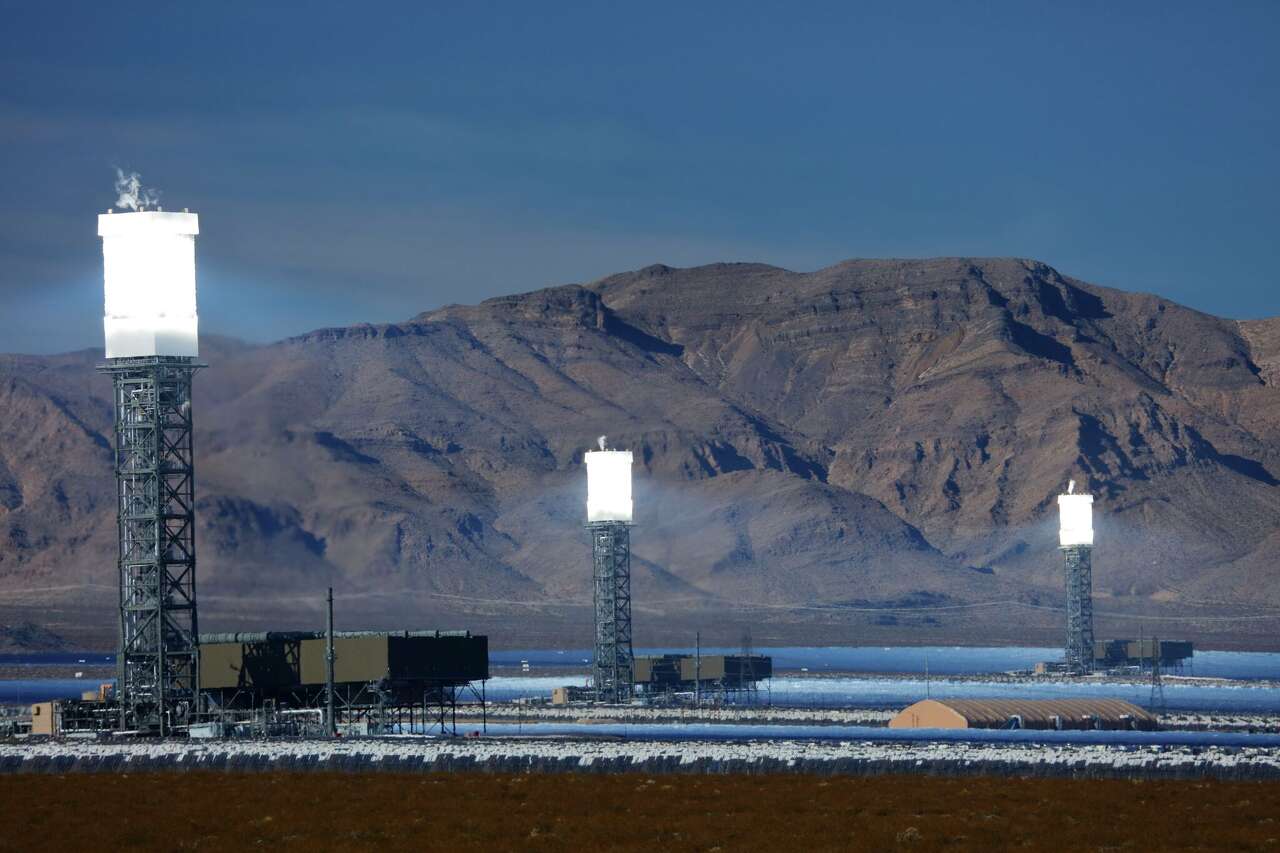
For those renewable projects that already exist or that the state does build, companies will be able to collect hundreds of millions of total dollars in additional sales revenues from new out-of-state buyers. When a new solar farm pops up in the Central Valley, its operators won’t have to count on PG&E customers for covering the entire investment – as other buyers in other states pitch in, PG&E customers should get better rates.
California can also expect some savings at night. Rather than run fossil fuel plants after the sun goes down, it’ll be easier to snag cheap hydroelectric and wind energy from across state lines.
John Tsoukalis, an energy market modeler with Brattle, is confident that the day-ahead market will help Californians, to the tune of more than $1 billion in annual savings if a West-wide rollout for the new market replaces the current system. Compared to the whole energy grid, that figure is minimal, likely to ease the pain of an average annual PG&E bill by no more than $100.
“These markets are very helpful at generating benefits, but we’re usually in the realm of a few percentage points of benefits for each customer,” Tsoukalis said.
Still, policymakers are touting costs as the main ambition behind the new market. Colvin remarked that every dollar saved is worth it: “I would take that deal.”
California’s new power dynamic with the West
This summer, Gov. Gavin Newsom and state lawmakers laid out their vision for a clean and affordable future. The Western energy expansion was one of six energy and environment bills in a package Newsom signed into law this September, touting it as a massive achievement that will save households money on bills while also steering California toward its renewable energy goals.
Newsom pointed specifically to the Western energy plan’s cost benefits during the bill signing in San Francisco, and said that it would serve to “address some of the issues around reliability, but also to stabilize our grid with the Western market. We’ve worked on that for over a decade. We’re getting it done here today.”

Assemblywoman Cottie Petrie-Norris authored Assembly Bill 825, which garnered bipartisan support and set up CAISO to run the Western energy expansion market. She said it was in direct response to constituents “navigating some profoundly important challenges,” referring to blackouts, clean energy goals and the state’s sky-high utility bills.
While California boasts its status as the world’s fourth largest economy, rising energy costs have largely outpaced rising incomes for low and middle class families, according to the Public Policy Institute of California. In a study published by the think tank this August, it found that the high cost burden for most households spiked between 2019 and 2021. And that was before a massive new buildout of data centers for artificial intelligence tech that are driving up energy usage and increasing the risk of more energy shortages in the West.
Another study published in 2024 by RAPID Survey Project based out of Stanford University found that more than one-third of California families raising young children struggle to pay their monthly bills. In that report, researchers found that utilities were the No. 1 category of material hardship –– with electric bills ranking first for 96% of respondents –– followed by health care costs.
The push to balance green energy with this affordability crisis has been at the top of policymakers’ minds. Colvin told Alpine Times: “I recognize there’s an inherent tension between affordability, reliability, and decarbonization goals.” But, he added, the theory behind the new day-ahead market is that as more trading partners join, electricity will become cheaper, and more people will rely on renewable energy.
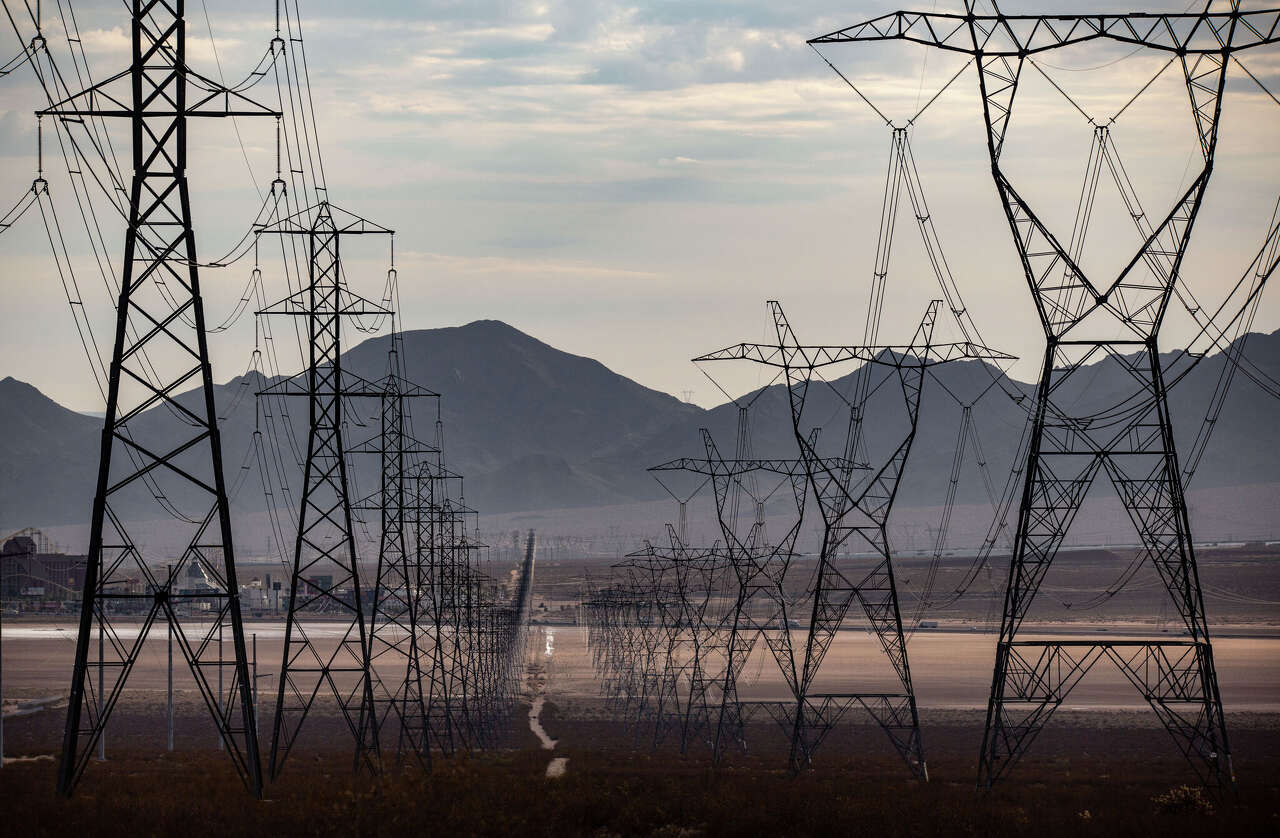
Now that California has set the ball rolling and authorized the new market, which CAISO is set to help run, the challenge will be convincing more states and their balancing authorities to join. Most of the 13 Western states, with the exception of Hawaii and Alaska, are eligible, and balancing authorities in Oregon, Washington, New Mexico and Nevada are already making commitments to join.
But the years of delays mean that California is playing catch-up. A competing marketplace called Markets+, based in Arkansas, has already been signing up balancing authorities in Western states who would make valuable additions to the CAISO-run offering. These balancing authorities –– some spanning multiple states, others as small as a city – will have a choice to make as the two separate day-ahead markets get off the ground.
Kelsey Martinez, the policy coordinator at Public Service Utility of New Mexico, which powers Albuquerque and Santa Fe, told Alpine Timesthat it has already been a partner with CAISO on the “spot market” and plans to commit to its extended market next year. The decision, she said, boiled down to what would be the most affordable for households.
The California market is larger than Markets+, she said, which means “there’s more generation, more customers, more transmission, and all those things represent greater opportunity for savings.”
Martinez suspects that if California’s launch next year proves that “it’s a really well-running, well-organized, well-executed market” and customers see benefits, “then I see that being attractive to the other states,” she said.
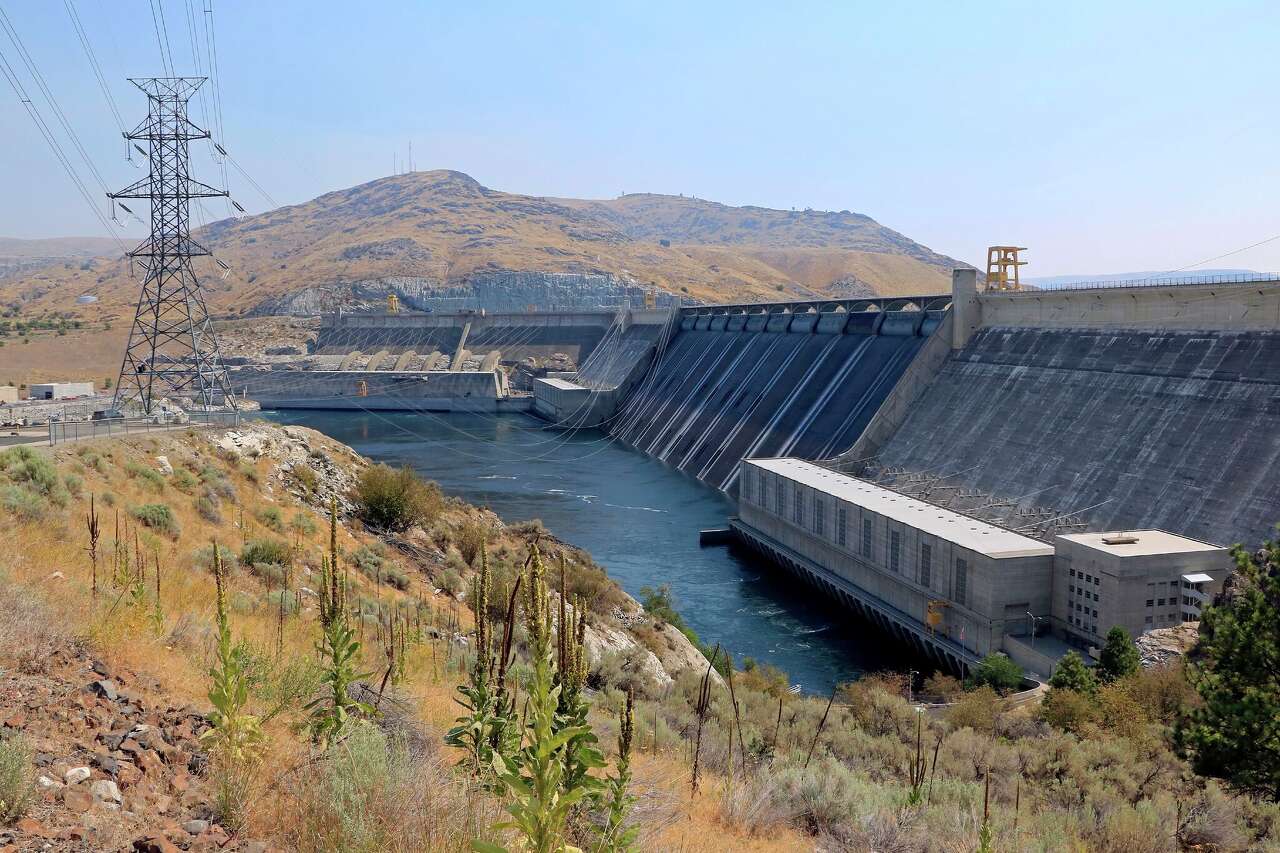
That is exactly the selling point California hopes to communicate. Right now, Bonneville Power Administration, a federally run group based in Oregon that generates power for the Pacific Northwest and sells wholesale electricity to eight Western states and Canada, is CAISO’s biggest critic. It left the California-run “spot market” to join Markets+, arguing that California already had too much power over the region. All eyes are now on the other states, who will have their chances to pick sides.
Colvin cautioned that with the launch not expected until next year, most people will continue to watch the market unfold as it rolls out: “The West needs some time.”
BEST OF Alpine Times
Drew Magary | I have terrible, terrible news for red AmericaTravel | Why everyone in this idyllic Calif. mountain town eats Nepalese food
Culture | Tragedy cut Sublime’s fame short. Now the singer’s son has the mic.
Travel | They lived inside Disneyland. Their house is still at the park today.
Get Alpine Times’s top stories sent to your inbox bysigning up for The Daily newsletter here.
Subscribe
Sign up for The Daily, Alpine Times’s free newsletter bringing you the best of the Bay Area.